





Gomti is the river of my childhood while Yamuna is the river of my youth.
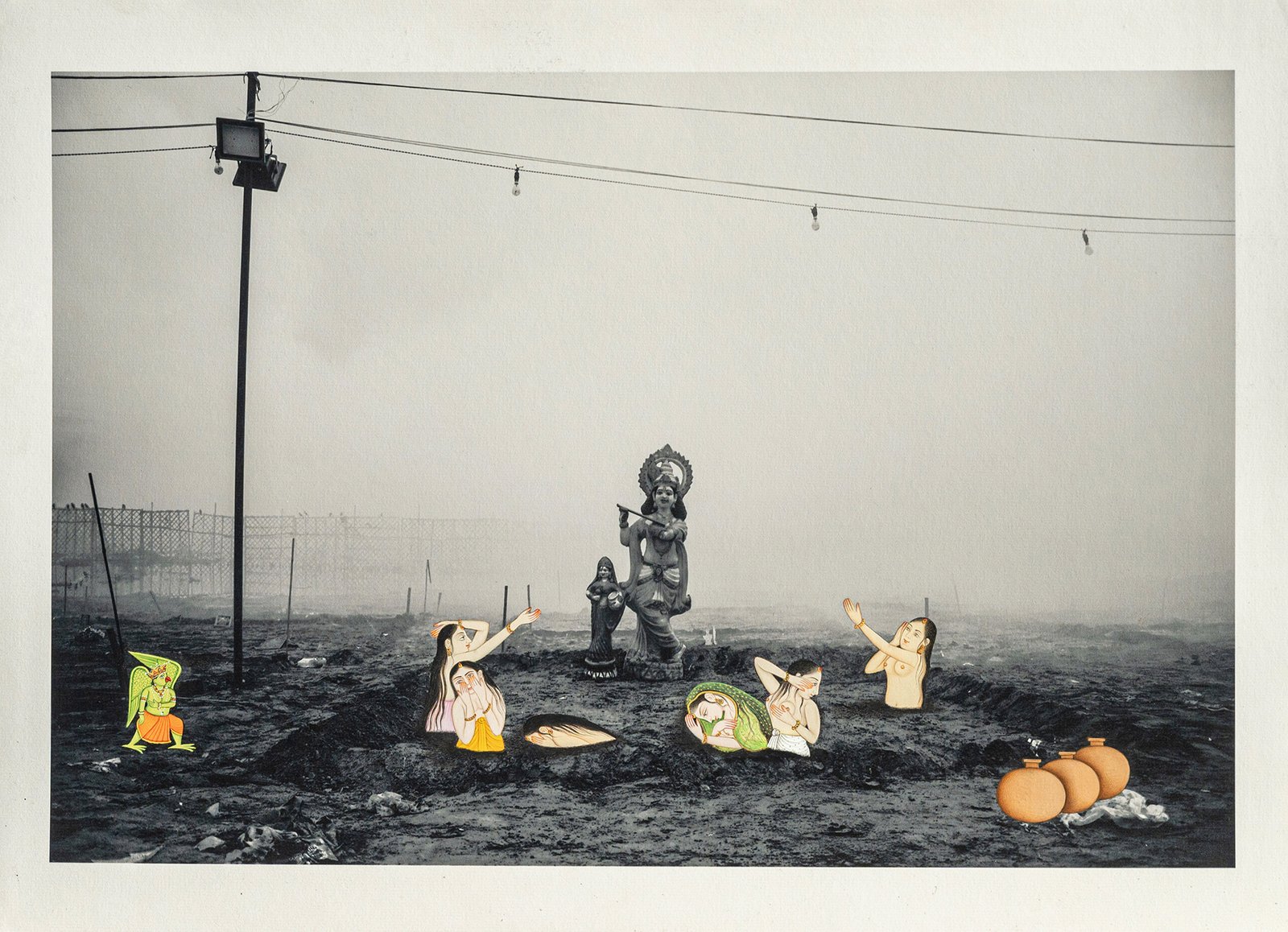
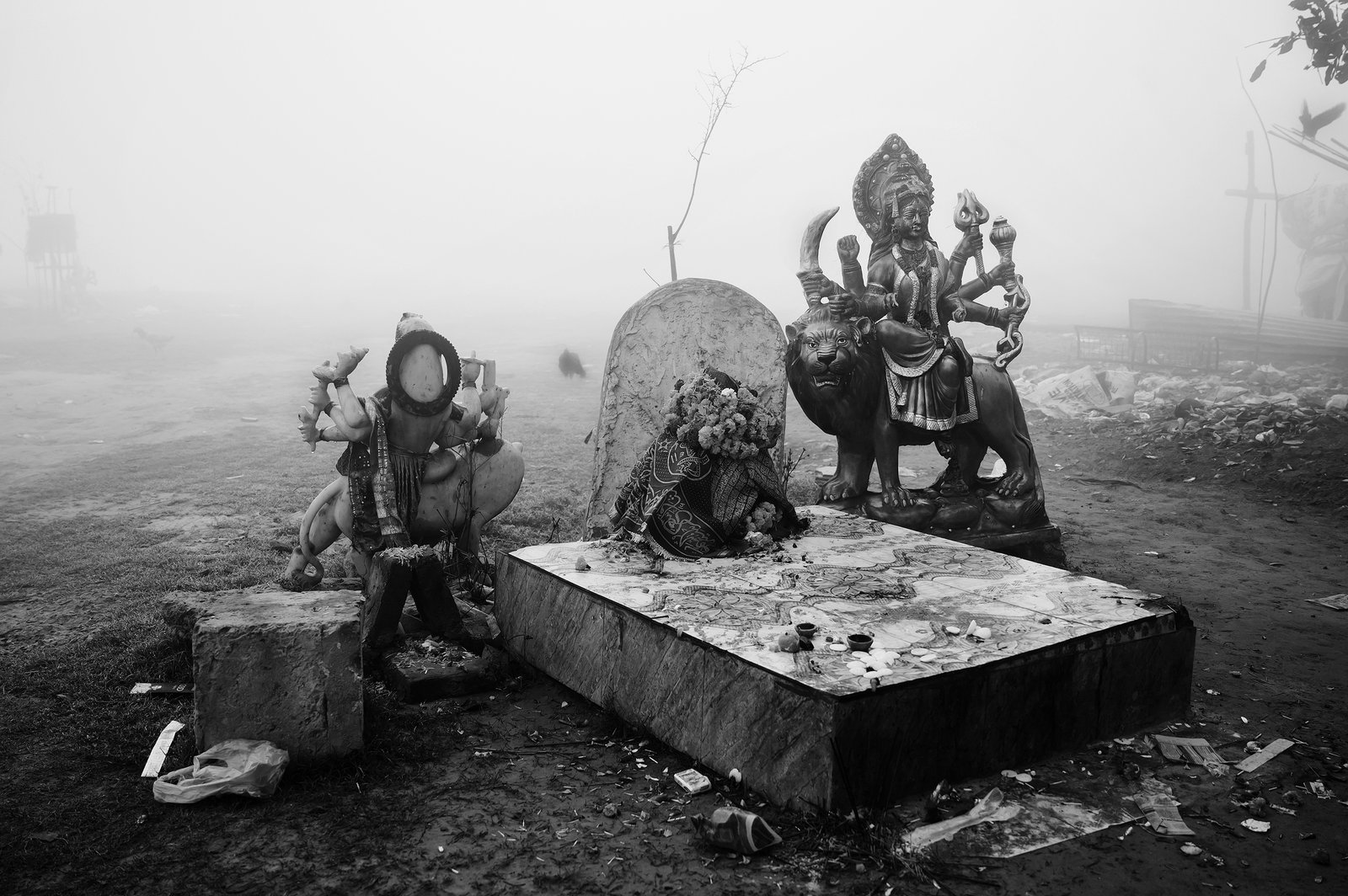
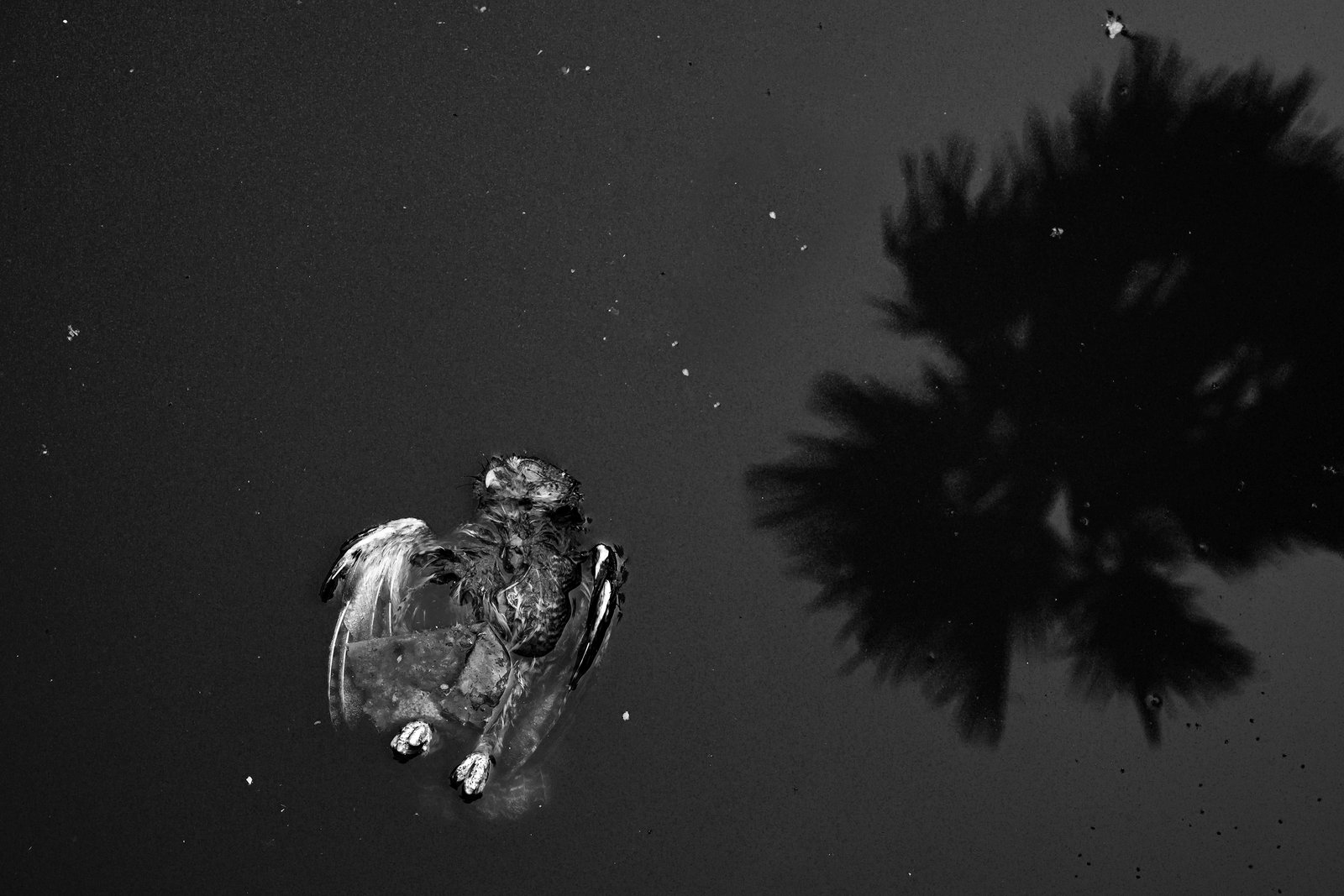
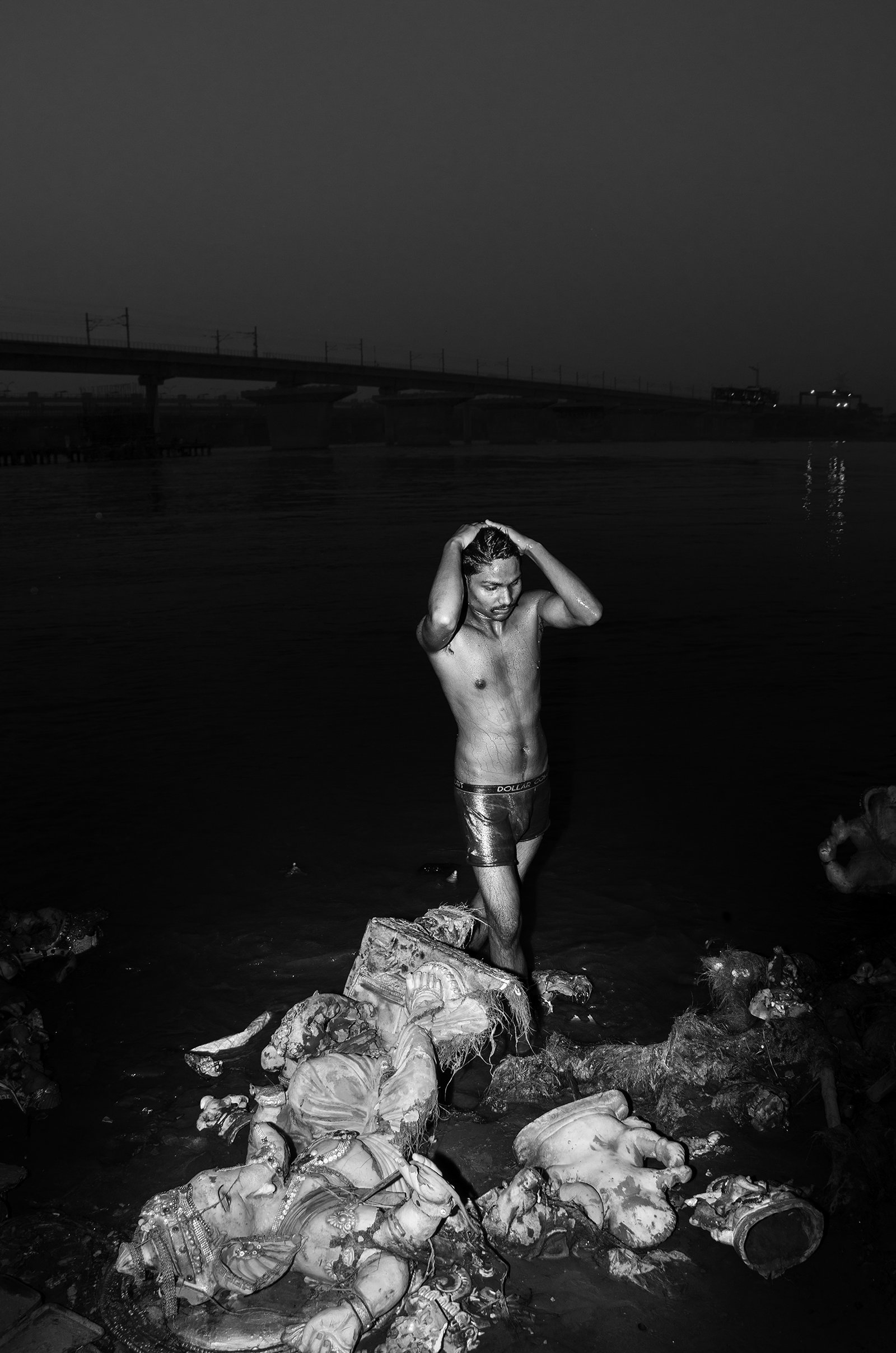
Fall of the Goddesses is an interdisciplinary visual art project that traces the ecological decline of the Yamuna and Gomti in India, which were once imagined as celestial Goddesses and celebrated through mythology, folklore, songs and Indian miniature painting. Through contemporary photographs shot over the course of a decade and Mughal, Awadhi, Pahadi and Kangra styles of miniature painting, the project juxtaposes the photographs with handpainted characters inspired by the historical Indian miniature paintings and the centuries old stories, folklore and mythology surrounding these rivers. Each artwork carries a physical trace of the river, created using water collected directly from it. As the contaminated water reacts with the paint and ink, the river itself erodes the surface of the artwork. The project also reflects on the fractured legacy of miniature painting after Partition, particularly Mughal and Awadhi traditions centred around Muslim cultural communities, and the gradual neglect of their living practices.
Ultimately, Fall of the Goddesses is not only about ecological collapse. The work examines how ecological transformation reshapes the ways rivers, landscapes and divinity have always been imagined and remembered. It reflects on the urgency of preserving pluralistic histories at a moment when both ecological systems and syncretic cultural identities are under threat in India.
The ongoing project is a series of 40 artworks created in collaboration with some of the few remaining Indian miniature artists from Rajasthan who continue to practise Mughal, Awadhi, Pahadi, and Kangra styles of miniature painting.

For nearly a decade, the project was a slow act of photographing the Yamuna and Gomti rivers across Delhi and Lucknow. In 2026, the photographic archive evolved into an interdisciplinary process that involved locating and working with some of the few remaining Indian miniature artists, several of whom are based in Jaipur and other parts of Rajasthan. As these artistic lineages continue to decline due to diminishing patronage, communalism, and industrial modes of image production, the process itself became an act of preservation.
Before the painting process, the photographic prints on rice paper were mounted onto a traditional handmade board, created by layering and pasting sheets of paper together using a starch-based adhesive. Drawing from folklore, mythology, oral narratives, and historical Indian miniature paintings depicting these rivers, characters were designed and digitally stylised before being carefully handpainted onto the rice paper photographic prints by the miniature artists according to the given artwork layout. The miniature figures appear as spectral presences inhabiting contemporary ecological ruins, collapsing temporal boundaries between mythology, history, and present-day ecological collapse.
The material process for the work remains deeply rooted in traditional practices passed down through generations within these artisans’ families. Natural pigments were prepared by hand using crushed minerals, stones, flowers, soot, Indian spices, vermilion and earth sourced from the Jhalana Hills and Forest in Jaipur. Colours such as lapis derived blues, malachite greens, geru reds from iron-rich earth and vermilion, lamp black made from soot, and whites extracted from crushed shells or zinc compounds were mixed with organic binders like gum arabic and water to do the painting on the photograph.